

#5月05日重磅更新:[3]–做对主图,拉开差距【2026.05.05】.mp4
#4月30日重磅更新:运营战神-[1]–看懂同行,找准玩法【2026.04.30】.mp4
#4月27日重磅更新:[70]–【实战特训课】–诊断分析.mp4
#4月24日重磅更新:[69]–【实战特训课】–诊断分析【2026.04.23】.mp4
#4月20日重磅更新:[68]– 神券大作战【2026.04.18】.mp4
#4月16日重磅更新:51.手把手教小二开直通车(2026.04.18).mp4
#4月16日重磅更新:52.神券大作战(2026.04.18).mp4
#4月16日重磅更新:[67]–高速邪修三部曲【2026.04.15】
#4月13日重磅更新:[66]–[实战特训课】–诊断分析
#4月8日重磅更新:[65]–【实战特训课】–诊断分析
#4月8日重磅更新:原价上大促
[63]–创意图攻略【2026.04.02】.mp4
[64]–圈养比价图【2026.04.03】.mp4
#4月3日重磅更新:[62]–强付费4月执行手册【2026.04.01】.mp4
#4月3日重磅更新:[62]–强付费4月执行手册【2026.04.01】.mp4
#3月31日重磅更新:[61]–【实战特训课】–诊断分析【2026.03.28】.mp4
#3月26日重磅更新:[60]–【实战特训课】–诊断分析【2026.03.25】.mp4
#3月24日重磅更新:[59]–【实战特训课】–诊断分析【2026.03.21】.mp4
#3月19日重磅更新:[58]–主流活动全解析【2026.03.18】.mp4
#3月16日重磅更新:[57]–【实战特训课】–诊断【2026.03.14】.mp4
#3月12日重磅更新:[56]–高权重链接发布:从0到1步骤【2026.03.11】.mp4
#3月10日重磅更新:[55]–【实战特训课】–诊断分析【2026.03.07】.mp4
#3月6日重磅更新:[54]–微付费高投产攻略【2026.03.04】.mp4
#2月28日重磅更新:[53]–卷王!开年作战室【2026.02.27】.mp4
#2月9日重磅更新:[52]–【实战特训课】–诊断分析
课程介绍:
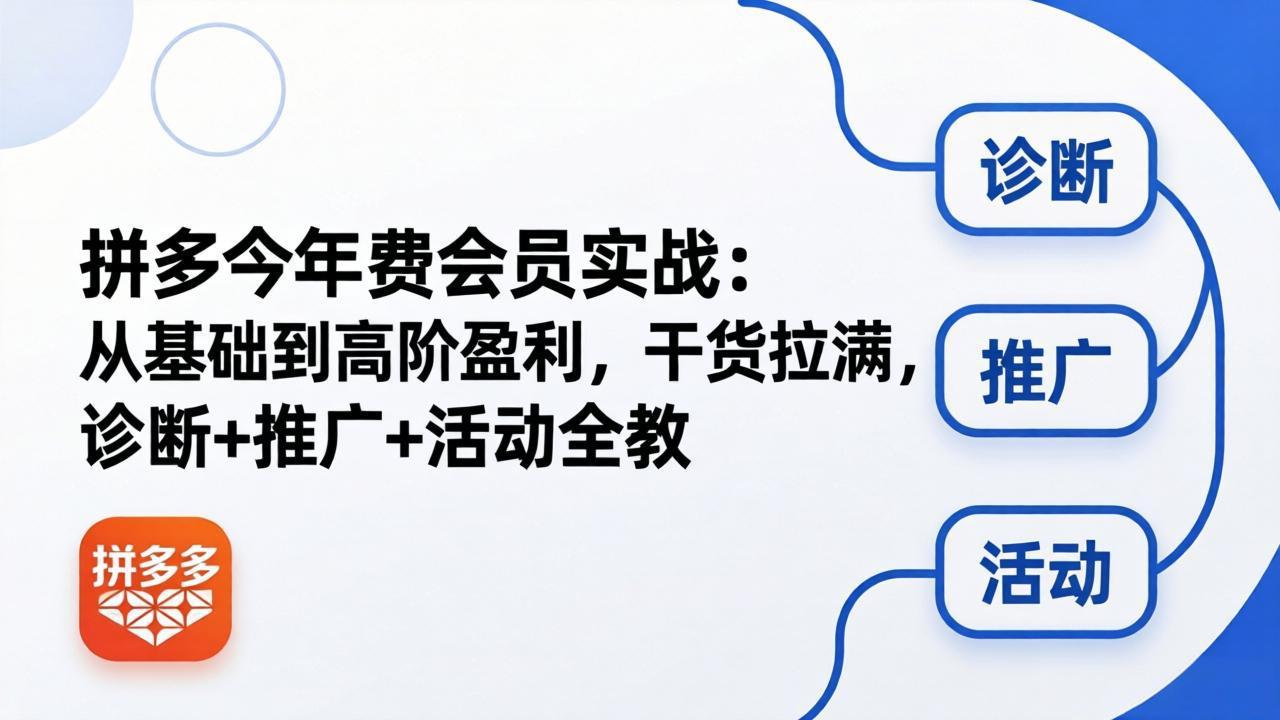
课程来自拼多多年费会员。看了课程之后,才发现自己以前的操作思路还有很多细节要完善优化,甚至底层逻辑完全不对需要重来,学了正确的方法之后才懂得什么叫做“稳定盈利”,所以,有可能你觉得“会”并不是真正的会,这也就是你碰到瓶颈的原因。每节课都是主任的经验分享实操,课程时长拉满,干货拉满,不用担心时长问题,你想学的时候,肯定学的会的。
课程目录:
├─01.年费·黑金训练班(更新中…)
│ 01.图不狠,店不稳:营销图 +SKU的擦边技巧(2025.09.25)
│ 02.扒光同行底裤:3步定市场,出价即绝杀(2025.09.27)
│ 03.冷启动养店技术(2025.10.04)
│ 04.直通车暗语,搭建+原理一刀流(2025.10.10)
│ 05.原价上大促
│ 06.强付费 Sop:从0-盈利全套实操(2025.10.11)
│ 07.主流活动字典:矩阵活动地图(2025.10.15)
│ 08.无可信Sku 解决思路(2025.10.15)
│ 09.原价砍大树 · 洗图2.0(2025.10.17)
│ 10.洗图2.0(价格失信解决方法)(2025.10.18)
│ 11.高投产微付费:拿捏推荐流量(2025.10.22)
│ 12.原价大促实操版横幅问题(2025.10.23)
│ 13.拼多多 · 异常数据急救(2025.10.25)
│ 14.2025拼多多主流玩法杀招大全(2025.10.29)
│ 15.推广搭建口诀 · 极速高级版(2025.11.08)
│ 16.原价上大促 · 砍大树(梳理新版)(2025.11.15)
│ 17.店铺强效入池方式(2025.11.20)
│ 18.“全站营销”爆卡大促(2025.11.21)
│ 19.3.01矩阵玩法(2025.11.22)
│ 20.原价砍大树 12月(2025.12.01)
│ 21.强付费启动手册(2025.12.03)
│ 22. 原价大树0.2版(2025.12.05)
│ 23.黄金测试链接公式【一】测试(2025.12.13)
│ 24.黄金测试链接公式【二】图片(2025.12.13)
│ 25.黄金测试链接公式【三】SKU与布局选择(2025.12.13)
│ 26.从0-1:实操制作高潜力商品(2025.12.17)
│ 27.洗SKU实战手册(2025.12.20)
│ 28.原价上活动(洗图4.0版)(2025.12.24)
│ 29.12月推广搭建口诀(2025.12.24)
│ 30.推广数据分析(2025.12.25)
│ 31.推广设置教程(2025.12.25)
│ 32.强付费与微付费区别(2025.12.26)
│ 33.看懂后台数据做出正确调价决策(2025.12.29).mp4
│ 34.微付费·高投产SOP(2025.12.31).mp4
│ 35.链接裂变的方法(2026.01.03).mp4
│ 36.流量稳定与放大(2026.01.03).mp4
│ 37.评分危机处理(2026.01.03).mp4
│ 38.异常数据分析与维护(2026.01.03).mp4
│ 39.从0到1:起量实战地图(2026.01.10) .mp4
│ 40.拼多多:数据波动分析与应对(2026.01.17).mp4
│ 41.成交出价 · 精准推流策略(2026.01.28).mp4
│ 42.春节不打烊规划(2026.02.04).mp4
│ 43.卷王!开年作战室(2026.02.27).mp4
│ 44.微付费高投产攻略(2026.03.04).mp4
│ 45.高权重链接发布:从0到1步骤(2026.03.11).mp4
│ 46.主流活动全解析(2026.03.18).mp4
│ 47.强付费4月执行手册(2026.04.01).mp4
│ 48. 创意图攻略【2026.04.02】.mp4
│ 49. 圈养比价图【2026.04.03】.mp4
│ 50. 高速邪修三部曲【2026.04.15】.mp4
│
├─02.2025突围战:盈利实战地图
│ 01.卷王!开年作战室(2025年02月05日)
│ 02.新手突围指南:四大隐形技巧(2025.02.08)
│ 03.蓝海掘金:同行调研与类目卡位方案(2025.02.11)
│ 04.爆款基因:高转化链接的5大核心系统(2025.02.15)
│ 05.烧钱推广自救指南:推广技巧合集(2025.02.19)
│ 06.推广底层逻辑:从“烧钱”倒“印钞”的利润模型(2025.02.21)
│ 07.推广底层逻辑:从“烧钱”倒“印钞”的利润模型(2025.02.22)
│ 08.高投产收割术:简单上手的动销模型(2025.02.22)
│ 09.2025 – 高利润强付费玩法(策略)(2025.02.26)
│ 10.拼多多活动高阶玩法技巧(2025.03.01)
│ 11.从0到1的实战案例分析(下)(2025.03.05)
│ 12.拼多多全类目活动解析(2025.03.06)
│ 13.从0到1的实战案例分析(上)(2025.03.08)
│ 14.店铺诊断与集中答疑(2025.03.12)
│ 15.贴符大作战!营销叠加Pro版(2025.03.19)
│ 16.3卡 · 横幅技术(2025.03.22)
│ 17.优惠券“套娃”实战课(2025.03.29)
│ 18.微付费盈利破局新思路(2025.04.02)
│ 19.高投产直通车启动步骤(2025.04.03)
│ 20.天梯活动流(2025.04.09)
│ 21.微付费4月进阶版(2025.04.12)
│ 22.上首页玩法【注:0库存双活动链接不能卡!】(2025.04.19)
│ 23.冲刺首页!玩法实操版(2025.04.23)
│ 24.中低利润 起量SOP(2025.04.26)
│ 25.暗券玩法 · 炸流量(2025.04.29)
│ 26.低价引流 防稽查方法(2025.04.30)
│ 27.简易上手!矩阵平销术(2025.05.10)
│ 28.5月 · 强付费起店步骤(2025.05.21)
│ 29.调车技巧(上)拖价手法(2025.05.28)
│ 30.调车技巧(下)断流急救(2025.05.28)
│ 31.推广从0-1全步骤(2025.06.04)
│ 32.滥发信息处理与切类目玩法(2025.06.11)
│ 33.2025年叠价 · 高投产(2025.06.18)
│ 34.叠价计价解决方案(2025.06.28)
│ 35.低成本入池3大妙招(2025.07.02)
│ 36.错类目技巧(回放)(2025.07.07)
│ 37.无损涨价(高投产必学技巧)(2025.07.09)
│ 38.合资+薅平台券玩法(2025.07.12)
│ 39.推广启动手册(底层逻辑)(2025.07.19)
│ 40.2025首页推荐爆流玩法(2025.07.23)
│ 41.2025·成交出价玩法(2025.07.30)
│ 42.成交出价补充篇(2025.08.02)
│ 43.技巧篇:老链接解投产更新(2025.08.06)
│ 44.打爆同行·万能定价策略(2025.08.09)
│ 45.原价上大促(8月版)(2025.08.21)
│ 46.高价动销·流量精品屋(2025.08.27)
│ 47.三合一 9月高效玩法(2025.08.30)
│ 48.切车双拖价【推广必学技】(2025.09.13)
│ 49.微付费高投产 · 实战指南(2025.09.17)
│ 50.强付费7步通关口诀(2025.09.20)
│
├─03.【不断更新···】全新玩法课程
│ 01.24年最新强付费玩法(上)(2024.01.17)
│ 02.24年最新强付费玩法(下)(2024.01.17)
│ 03.爆款竞价玩法(2024.01.20)
│ 04.“低价引流”规避+解决方式(2024.01.27)
│ 05.一课上手!新版拼多多(2024.02.22)
│ 06.多多推广启动口诀 (通用)(2024.03.02)
│ 07.3月双活动+官补玩法(2024.03.19)
│ 08.秘籍:新链接加权宝典(2024.03.20)
│ 09.维护链接防断流(2024.03.27)
│ 10.低利润产品的生存手册(2024.04.03)
│ 11.我的产品开什么车?(2024.04.07)
│ 12.稽查过后:如何规范上架链接(2024.04.10)
│ 13.直通车拖价手法(2024.04.13)
│ 14.日限额的设置与调整(2024.04.27)
│ 15.5月全新 · 原价活动爆流术(2024.05.08)
│ 16.双维度驱动:提升店铺销量(2024.05.15)
│ 17.6月风向标:低价聚宝盆(2024.06.01)
│ 18.高价强付费步骤 – 轻松上手(2024.06.26)
│ 19.不畏秒杀 轻松上手(2024.07.03)
│ 20.24年下半年重点玩法+高频问题(2024.07.13)
│ 21.微付费高投产:商品推广新策略(2024.07.31)
│ 22.商品推广·微付费(下)—原理与解答(2024.08.03)
│ 23.原价卡秒杀技术(2024.08.14)
│ 24.商推冷启动+前期断流解决方案(2024.08.21)
│ 25.技巧:如何提升推荐流量(2024.09.04)
│ 26.无视比价Sku技巧(2024.11.10)
│ 27.开塞露玩法与应用(2024.11.13)
│ 28.关于 开塞露通知(2024.11.15)
│ 29.双Sku玩法(二刀流)(024.11.17)
│ 30.强付费操作指南(2024.11.20)
│ 31.强付费指南 (下)(2024.12.04)
│ 32.躲价 · 隐藏系统(2024.12.11)
│ 33.疯狂阶段一(2024.12.17)
│ 34.疯狂阶段一(直播版)(2024.12.21)
│ 35.2025《春节运营攻略》-上(2025年01月15日)
│ 36.2025《春节运营攻略》-下(2025年01月21日)
│
├─04.顺风班·30天冲刺计划
│ 01.应季爆品·3步爆单口诀(2024.09.18)
│ 02.速成:洗不死的Sku(2024.09.21)
│ 03.1课掌握:3步学全店数据(2024.09.25)
│ 04.全新·微付费2套必学指南(2024.09.28)
│ 05.学同行的玩法!干他的链接(2024.10.09)
│ 06.临时10月12日 双活动突发解决方式(2024.10.12)
│ 07.我的链接——黄总都得下一单(2024.10.12)
│ 08.最新!原价砍大树【冲刺双十一】(2024.10.16)
│ 09.盈利技巧:强付费正确拖投产方式(2024.10.19)
│ 10.拿捏商品推广:捷径说明书(2024.10.23)
│
├─05.2023下半年最新直播课程入口
│ 01.爆单第一步:入池
│ 02.24年最新强付费玩法(上)
│ 03.24年最新强付费玩法(下)
│ 04.双活动配车,爆单小儿科!
│ 05.24年:低成本安全改销量技术
│ 06.【实操更新】防比价的方法与实操
│ 07.【实操更新】手把手带你原价上秒杀
│ 08.极速584连环秒杀
│ 09.【实操更新】常规活动的技巧与适用情况
│ 10.自然流起量秘籍
│ 11.带你盈利!强付费实现高投产
│ 12.24年!全新四大起量方案
│ 13.避雷专题!容易忽视的平台潜规则
│ 14.【低客单适用】强付费系统介绍
│ 15.【高客单适用】强付费系统介绍
│ 16.23-24运营思路布局与多维度流量分析
│ 17.拯救,大难题!阶段2断流
│ 18.全站进2不断流,链接永远有搞头!
│ 19.拒绝全站衰败,保持巅峰状态!
│ 20.全站案例剖析,解决所有疑难杂症!
│ 21.产品适用方向|找到正确的运营玩法
│
├─06.年费入门基础必看
│ 01.多多基础公式与“黑话”大全(22.11.09)
│ 02.剖析流量入口 布局产品思路(22.11.09)
│ 03.做对市场分析 效率飙升十倍(22.11.09)
│ 04.寻找对标竞品 单是抄出来的(22.11.09)
│ 05.主图做得好 爆单少不了(22.11.09)
│ 06.标题写的对 流量不再退(22.11.09)
│ 07.【最全总结】SKU布局超高技巧(22.11.09)
│ 08.【系统玩法】最新推广上路必修课(22.11.09)
│ 09.成交出价够合理 买家都要追着你(22.11.09)
│ 10.选品分析思路(22.11.26)
│ 11.只需3步!轻松整合玩法(23.03.22)
│ 12.多多推广底层逻辑剖析(23.04.15)
│ 13.最新流量入口新思路(23.05.10)
│ 14.23年全新SKU布局方式(上)(23.05.17)
│ 15,.23年全新SKU布局方式(下)(23.05.20)
│ 16.引爆神秘流量的多多主图(23.05.24)
│
├─07.活动技巧大全【即将大更新】
│ 01.必看,主任有话说(23.03.19)
│ 02.大促玩法(23.03.13)
│ 03.9.9特卖玩法(23.03.13)
│ 04.领券中心玩法(23.03.13)
│ 05.秒杀活动玩法(23.03.13)
│ 06.大促爆流量玩法(23.03.17)
│ 07.领券+车位,天天都是第1名(23.04.06)
│ 08.活动配车打法指南(23.06.03)
│ 09.原价活动技巧与起盘思路(23.05.31)
│
├─08.付费技巧大全【即将大更新】
│ 01.23年7月强付费玩法(新版本测试后更新)(23.07.01)
│ 02.提升运营思路 学好数据分析(22.11.09)
│ 03.一次搞定3大难题【烧不动+流量贵+不赚钱】(22.11.09)
│ 04.涨价也疯狂—玩转多多流量密码(22.11.09)
│ 05.不能错过的动销型店铺养成(22.07.30)
│ 06.动销型店铺养成实操案例(22.08.03)
│ 07.矩阵式-爆破上新流量(23.03.29)
│ 08.【大更新】起盘思路与玩法——小类目动销决胜千里升级版(22.12.17)
│ 09.【认知课】多多推广底层逻辑(22.12.21)
│ 10.合理拖价!从此再无烂计划(23.04.19)
│ 11.当下自定义扮演角色与玩法(23.06.17)
│ 12.【实操课】-7月重点运营知识(1)(23.07.26)
│
├─09.低价自然技巧
│ 01.应季品!低单价!爆自然操作方式(23.03.08)
│ 02.低客单价起量核心玩法(22.11.10)
│ 03.【答疑专场】低客单价起量核心玩法(22.11.10)
│ 04.【大更新】起盘思路与玩法——【年费版】自然流量的必经之路(22.12.10)
│
├─10.诊断实操课
【实战特训课】——诊断分析(24.01.03)
【实战特训课】——诊断分析(24.01.10)
【实战特训课】——诊断分析(24.01.13)
【实战特训课】——诊断分析(24.01.17)
【实战特训课】——诊断分析(24.01.31)
【实战特训课】——诊断分析(24.02.28)
【实战特训课】——诊断分析(24.03.06)
【实战特训课】——诊断分析(24.03.09)
【实战特训课】——诊断分析(24.03.13)
【实战特训课】——诊断分析(24.03.23)
【实战特训课】——诊断分析(24.04.17)
【实战特训课】——诊断分析(24.04.20)
【实战特训课】——诊断分析(24.04.24)
【实战特训课】——诊断分析(24.05.11)
【实战特训课】——诊断分析(24.05.18)
【实战特训课】——诊断分析(24.05.22)
【实战特训课】——诊断分析(24.05.25)
【实战特训课】——诊断分析(24.05.29)
【实战特训课】——诊断分析(24.06.05)
【实战特训课】——诊断分析(24.06.12)
【实战特训课】——诊断分析(24.06.15)
【实战特训课】——诊断分析(24.06.19)
【实战特训课】——诊断分析(24.06.29)
【实战特训课】——诊断分析(24.07.06)
【实战特训课】——诊断分析(24.07.10)
【实战特训课】——诊断分析(24.07.17)
【实战特训课】——诊断分析(24.07.20)
【实战特训课】——诊断分析(24.07.24)
【实战特训课】——诊断分析(24.08.07)
【实战特训课】——诊断分析(24.08.10)
【实战特训课】——诊断分析(24.08.17)
【实战特训课】——诊断分析(24.08.24)
【实战特训课】——诊断分析(24.08.28)
【实战特训课】——诊断分析(24.09.11)
【实战特训课】——诊断分析(24.09.14)
【实战特训课】——诊断分析(24.10.30)
【实战特训课】——诊断分析(24.11.01)
【实战特训课】——诊断分析(24.11.06)
【实战特训课】——诊断分析(24.11.16)
【实战特训课】——诊断分析(24.11.23)
【实战特训课】——诊断分析(24.11.27)
【实战特训课】——诊断分析(24.11.29)
【实战特训课】——诊断分析(24.12.07)
【实战特训课】——诊断分析(24.12.14)
【实战特训课】——诊断分析(24.12.25)
【实战特训课】——诊断分析(24.12.28)
【实战特训课】——诊断分析(24.12.30)
【实战特训课】——诊断分析(25.01.04)
【实战特训课】——诊断分析(25.01.08)
【实战特训课】——诊断分析(25.01.11)春节备战:年后运营与店铺诊断
【实战特训课】——诊断分析(25.01.17)
【实战特训课】——诊断分析(25.03.12)
【实战特训课】——诊断分析(25.03.26)
【实战特训课】——诊断分析(25.04.06)
【实战特训课】——诊断分析(25.04.16)
【实战特训课】——诊断分析(25.05.07)
【实战特训课】——诊断分析(25.05.14)
【实战特训课】——诊断分析(25.05.17)
【实战特训课】——诊断分析(25.05.19)
【实战特训课】——诊断分析(25.05.24)
【实战特训课】——诊断分析(25.06.07)
【实战特训课】——诊断分析(25.06.21)
【实战特训课】——诊断分析(25.06.25)
【实战特训课】——诊断分析(25.06.28)
【实战特训课】——诊断分析(25.07.05)
【实战特训课】——诊断分析(25.07.16)
【实战特训课】——诊断分析(25.07.26)
【实战特训课】——诊断分析(25.08.16)
【实战特训课】——诊断分析(25.08.20)
【实战特训课】——诊断分析(25.09.03)
【实战特训课】——诊断分析(25.09.06)
【实战特训课】——诊断分析(25.11.01)
【实战特训课】——诊断分析(25.11.05)
【实战特训课】——诊断分析(25.11.12)
【实战特训课】——诊断分析(25.11.26)
【实战特训课】——诊断分析(25.12.10)
【实战特训课】——诊断分析(26.01.07)
【实战特训课】——诊断分析(26.01.14)
【实战特训课】——诊断分析(26.01.21)
【实战特训课】——诊断分析(26.02.01)
【实战特训课】——诊断分析(26.02.07)
【实战特训课】——诊断分析(26.03.07)
【实战特训课】——诊断分析(26.03.14)
【实战特训课】——诊断分析(26.03.21)
【实战特训课】——诊断分析(26.03.25)
【实战特训课】——诊断分析(26.03.28)
【实战特训课】–诊断分析【2026.04.09】
【实战特训课】–诊断分析【2026.04.23】
【实战特训课】–诊断分析【2026.04.25】
│
└─11.运营战神(5月更新中)
[1]–看懂同行,找准玩法[2026.04.30】.mp4
[2]–老链接解投产技巧【2026.05.04】.mp4
[3]–做对主图,拉开差距【2026.05.05】.mp4
持续更新中……
感谢您的来访,获取更多精彩文章请收藏本站。